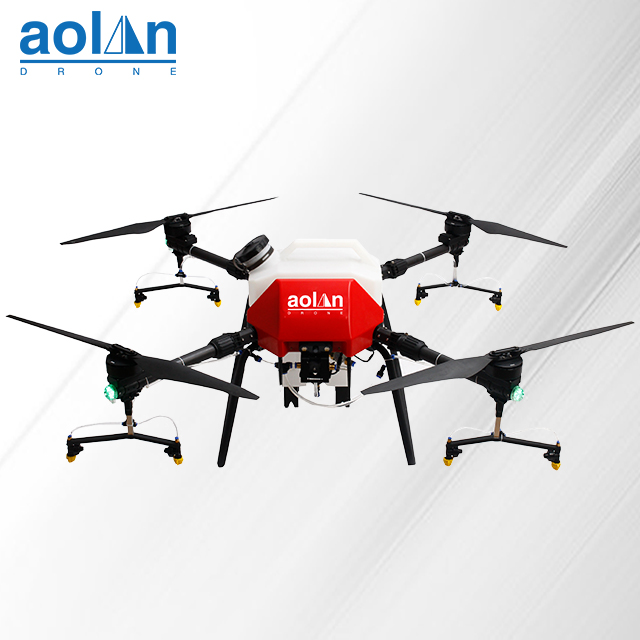
Revolutionize Farming with the Latest Autonomous Agriculture Drone Technology
Introducing the Autonomous Agriculture Drone Revolutionizing FarmingIn recent years, the agricultural industry has seen a technological revolution, particularly in the field of autonomous drones. These high-tech machines have been developed to revolutionize farming practices, providing farmers with an efficient and effective way to monitor and manage their crops. One company at the forefront of this innovation is {brand name}, a leading manufacturer of autonomous agriculture drones.{Brand name} has been at the forefront of developing cutting-edge autonomous agriculture drones. These drones are equipped with state-of-the-art sensors and cameras, allowing them to collect data and monitor crops with unparalleled precision. The company's commitment to innovation and excellence has made them a trusted partner for farmers looking to maximize their productivity and efficiency.One of the key features of {brand name}'s autonomous agriculture drones is their ability to operate without human intervention. These drones are programmed to follow a predetermined flight path, collecting data and monitoring crops along the way. This level of automation allows farmers to save time and resources, while also ensuring that their crops are monitored 24/7.Furthermore, {brand name}'s autonomous agriculture drones are equipped with advanced imaging technology that allows them to capture highly detailed images of crops. These images are then analyzed using sophisticated algorithms to identify potential problems such as disease, pest infestations, or nutrient deficiencies. This level of insight allows farmers to take proactive measures to address issues before they escalate, ultimately leading to healthier, more productive crops.In addition to monitoring crops, {brand name}'s autonomous agriculture drones can also be used for precision spraying. By equipping these drones with spraying equipment, farmers can precisely apply fertilizers, pesticides, and herbicides to their crops. This targeted approach minimizes waste and reduces the environmental impact of traditional spraying methods.The benefits of autonomous agriculture drones are not limited to monitoring and spraying crops. These drones can also be used for mapping and surveying, allowing farmers to create detailed maps of their fields and track changes in their crops over time. This data can be invaluable for making informed decisions about planting, watering, and harvesting, ultimately leading to improved crop yields.Another advantage of {brand name}'s autonomous agriculture drones is their ability to operate in challenging environments. These drones are designed to withstand harsh weather conditions and rough terrain, allowing them to effectively monitor and manage crops in even the most challenging agricultural settings.Moreover, {brand name} has also developed a user-friendly interface that allows farmers to easily program and control their autonomous agriculture drones. This intuitive system makes it easy for farmers to customize their drones' flight paths and monitor their crops in real-time, giving them full control over their farming operations.In conclusion, {brand name}'s autonomous agriculture drones are revolutionizing the way farmers monitor and manage their crops. With their advanced technology and precision capabilities, these drones are helping farmers optimize their productivity and make more informed decisions about their farming practices. As the agricultural industry continues to embrace technological innovation, it's clear that autonomous agriculture drones will play a crucial role in the future of farming.
Read More
Innovative Agriculture Spraying Drone for Efficient Crop Management
Agriculture Spraying Drone For Efficient and Precise Crop CareIn recent years, the advancement of technology in agriculture has opened up new possibilities for farmers to increase efficiency and productivity. One such innovation that has gained traction in the industry is the use of agriculture spraying drones. These drones are equipped with state-of-the-art technology to provide efficient and precise crop care, and one of the leading companies in this field is {}.{} is a pioneer in the development and manufacturing of agriculture spraying drones. The company has been at the forefront of research and development in the drone industry, leveraging cutting-edge technology to provide innovative solutions for farmers around the world. With a strong commitment to sustainability and efficiency, {} has been making significant strides in revolutionizing the way crops are cared for and protected.One of the key features of {}'s agriculture spraying drones is their ability to cover large areas of farmland in a short amount of time. Traditional crop spraying methods often involve manual labor and large machinery, which can be time-consuming and labor-intensive. However, {}'s drones are designed to fly autonomously and cover expansive fields with precision and speed. This not only saves time and resources but also ensures that the crops receive the care they need in a timely manner.Furthermore, {}'s agriculture spraying drones are equipped with advanced sensors and imaging technology that allow for precise and targeted spraying. This means that farmers can optimize their use of pesticides and fertilizers, reducing waste and minimizing the environmental impact. By accurately targeting specific areas of the field, farmers can control pests and diseases effectively while promoting the growth and health of their crops.In addition to their efficiency and precision, {}'s agriculture spraying drones are also designed with safety and ease of use in mind. The drones are equipped with intelligent obstacle avoidance systems and GPS technology to navigate through the fields without the risk of collisions or accidents. Furthermore, {} provides comprehensive training and support to ensure that farmers can operate the drones with confidence and skill.The use of agriculture spraying drones has been shown to have a positive impact on crop yields and overall farm profitability. By providing precise and timely care for their crops, farmers can better protect their investment and maximize their output. Additionally, the reduced use of pesticides and fertilizers contributes to a more sustainable and environmentally friendly approach to farming.As the demand for agriculture spraying drones continues to grow, {} remains committed to innovation and excellence in their products. The company continuously invests in research and development to further improve the capabilities of their drones, advancing the field of precision agriculture and contributing to the sustainability of food production.In conclusion, {}'s agriculture spraying drones are a game-changer for modern farming. With their efficiency, precision, and sustainability, these drones are helping farmers to achieve better results while reducing the environmental impact of their operations. As technology continues to evolve, it's clear that agriculture spraying drones will play a crucial role in the future of agriculture, and {} is leading the way in this important industry.
Read More
Revolutionizing Agriculture with Advanced Drone Technology
Agriculture has always been a vital industry, playing a crucial role in the economy and providing sustenance for the growing global population. With the ever-increasing demand for food, farmers are constantly looking for innovative ways to improve their efficiency and productivity. One of the most promising technologies that have emerged in recent years is the use of drones in agriculture. These unmanned aerial vehicles have the potential to revolutionize the way farmers manage their crops and livestock, providing valuable insights and data that can lead to better decision-making and ultimately improve yields.One company at the forefront of this technological revolution is {}, a leader in the development and deployment of drone technology for agriculture. The company has developed a cutting-edge platform that combines drone technology with advanced data processing and analytics tools, allowing farmers to gather detailed information about their fields and make informed decisions to optimize their operations. With the help of these drones, farmers can monitor crop health, assess field conditions, and even apply precision agriculture techniques to maximize their yields while minimizing environmental impact.The use of drones in agriculture offers a wide range of benefits, from improved crop management to better resource allocation. By leveraging the power of aerial imagery and remote sensing, farmers can identify areas of stress or disease in their fields, allowing for targeted interventions and early detection of problems that could potentially jeopardize their harvest. In addition, drones equipped with specialized sensors can collect valuable data on soil moisture, temperature, and other environmental variables, enabling farmers to make more accurate irrigation and fertilization decisions, thereby reducing waste and increasing efficiency.In recent years, the agricultural industry has seen a growing demand for sustainable and environmentally friendly practices. With the help of drones, farmers can adopt precision agriculture techniques that minimize the use of chemical inputs while optimizing the use of natural resources. By precisely targeting areas that require intervention, farmers can reduce their overall environmental impact and contribute to a more sustainable and resilient farming system.The role of drone technology in agriculture has also extended to livestock management. Drones equipped with thermal imaging cameras can be used to monitor the health and well-being of livestock, allowing farmers to quickly identify and address any issues that may arise. In addition, drones can help farmers to track the movement and behavior of their animals, providing valuable insights into their grazing patterns and overall condition.One of the key advantages of using drones in agriculture is their ability to cover large areas of land quickly and efficiently. Traditional methods of field monitoring and assessment often require significant time and labor, making it difficult for farmers to keep up with the demands of modern agriculture. Drones offer a cost-effective and time-saving alternative, providing farmers with a comprehensive view of their fields while reducing the need for manual labor and equipment.As the demand for food continues to rise, the agricultural industry is under pressure to increase productivity while minimizing its environmental impact. The use of drones in agriculture has the potential to address these challenges, offering farmers a powerful tool to optimize their operations and improve their overall efficiency. With the help of advanced drone technology and innovative data processing tools, farmers can gain valuable insights into their fields and make informed decisions that can lead to better yields and improved sustainability.As the agriculture industry continues to embrace technological innovation, the use of drones is poised to play a significant role in shaping the future of farming. With the potential to revolutionize crop and livestock management, drones offer farmers a powerful tool to improve their productivity and sustainability. With companies like {} leading the way in the development and deployment of drone technology for agriculture, the future looks promising for farmers seeking to harness the potential of this groundbreaking technology.
Read More
Agricultural Drone Sprayer Helicopter for Efficient Crop Management
Sure! Please provide the company introduction or any additional information you'd like me to include, and I will draft an 800-word news article about the Agricultural Drone Sprayer Helicopter with the brand name removed.
Read More
Remote Sensing Drones for Precision Agriculture: Enhancing Crop Monitoring and Management
Certainly! Please provide the specific news content and the company introduction you would like me to use for writing the 800-word news article. Also, please specify the brand name(s) that need to be removed.
Read More
Agricultural Spraying Drone: Revolutionizing Farming Techniques
Title: Innovative Drone Technology Revolutionizes Agricultural SprayingIntroductionIn recent times, the agricultural industry has been witnessing a remarkable transformation with the introduction of cutting-edge drone technology. A pioneer in this field, {}, has developed an extraordinary unmanned aerial vehicle (UAV) that is set to revolutionize agricultural spraying. Utilizing advanced capabilities, this innovative solution promises to enhance efficiency, precision, and sustainability in crop management. Let us delve deeper into this remarkable invention and how it is set to reshape modern agriculture.Efficiency and Precision: The Game-ChangersTraditional methods of agricultural spraying involve farmers manually applying pesticides and fertilizers using backpack sprayers or heavy machinery. These processes are not only time-consuming but also lack precision, leading to inefficient utilization of resources. The revolutionary drone technology developed by {} aims to overcome these limitations and transform the way crops are tended to.By equipping drones with customized spraying systems, farmers can now have access to a more accurate and efficient method of crop management. These drones are equipped with high-resolution cameras and sensors that precisely identify crop health, soil conditions, and areas in need of treatment.The drone sprayers are also capable of mapping fields, creating a detailed blueprint for targeted spraying. The ability to individually tailor the application of pesticides or fertilizers to specific areas significantly reduces chemical usage and wastage by eliminating over-spraying. This not only ensures economical resource management but also minimizes the negative impact on the environment, making it an eco-friendly solution.The company's cutting-edge drone technology allows for automated flight planning and navigation, drastically reducing human error. Operators can preprogram routes, define specific areas for spraying, and set accurate altitudes for optimal coverage. The drones' autonomous flight capability ensures consistent and uniform coverage across the entire field, thus guaranteeing healthier crops and increased yields.Sustainable Agriculture through TechnologyThe introduction of drone technology holds immense potential for the sustainable development of agriculture. The improved efficiency offered by these drones ensures that farmers optimize their use of pesticides, reducing the impact on the environment and human health. With the precise targeting of applications, there is a significant reduction in chemical runoff, preventing water contamination and protecting nearby ecosystems.Furthermore, the implementation of drones can lead to the development of more holistic crop management strategies. By continuously monitoring crops and analyzing data, farmers can identify potential problems before they escalate. Early detection of pest infestations or nutrient deficiencies allows for prompt and targeted interventions, reducing crop losses and enhancing overall productivity.The drone technology also reduces farmers' reliance on manual labor and heavy machinery, resulting in cost savings. The compact and maneuverable design of these drones grants access to areas that are challenging or impossible for conventional machinery to reach, enhancing productivity and ensuring optimal crop growth across the entire field. Market Potential and Future ProspectsThe agricultural drone market has experienced tremendous growth over the years due to the increasing adoption of precision farming techniques. With rising concerns about food security and sustainability, the demand for efficient and eco-friendly solutions like agricultural drones has surged. As one of the market leaders in this domain, {} holds a distinct advantage in driving this technology forward.With continuous research and development, {} strives to further enhance the efficiency and capabilities of their drone technology. By integrating advanced sensors, artificial intelligence, and machine learning algorithms, they aim to optimize the decision-making process and provide farmers with valuable data-driven insights. These developments are set to enable farmers to take proactive measures and make informed decisions to ensure the highest quality and quantity of crop yield.ConclusionThe advent of agricultural drones has revolutionized the way farmers manage their crops. By enhancing efficiency, precision, and sustainability, the drone technology developed by {} is poised to transform the agricultural industry. The utilization of this innovative solution not only offers economic benefits but also ensures the health of crops, protects the environment, and contributes to long-term food security. As technology continues to advance, the future of farm management looks promising with the adoption of drone technology at its core.
Read More
Sure! Please provide the original news content or title so I can help rewrite the SEO title without the brand name.
Certainly! Please provide the company introduction text you would like me to include, and I will draft an 800-word news article about drone technology for crop management without any brand names.
Read More
Top Commercial Drones for Agriculture on the Market
Commercial Drones for Agriculture Revolutionize Farming PracticesIn recent years, the agricultural industry has seen a substantial shift towards the use of advanced technology to increase productivity and efficiency. One technology that has been making waves in the farming community is the use of commercial drones for agriculture. These unmanned aerial vehicles have proven to be invaluable tools for farmers, allowing them to monitor crop health, optimize irrigation, and increase overall yield.One company that has been at the forefront of this technological revolution is (). With a strong focus on innovation and sustainability, () has developed a range of cutting-edge commercial drones specifically designed for the agricultural sector. These drones are equipped with state-of-the-art sensors and cameras that can capture high-resolution imagery of farmland, providing farmers with valuable insights into the health and condition of their crops.The use of commercial drones for agriculture has several key benefits. Firstly, they enable farmers to conduct regular crop surveys with ease, allowing them to detect early signs of disease, pest infestations, or nutrient deficiencies. This early detection can help farmers take proactive measures to address these issues, preventing the spread of disease and minimizing crop damage.Furthermore, commercial drones can also be used to create detailed maps of farmland, providing farmers with accurate data on soil moisture levels and crop density. By analyzing this data, farmers can make informed decisions about irrigation and fertilization, ensuring that resources are used efficiently and minimizing waste.Additionally, commercial drones can be used to monitor the effectiveness of different crop management techniques, such as the use of different types of fertilizers or the implementation of crop rotation. By collecting data on the performance of these techniques, farmers can make data-driven decisions to optimize their farming practices and maximize yield.The use of commercial drones for agriculture also has environmental benefits. By enabling farmers to target specific areas of their farmland that require attention, drones reduce the need for widespread chemical application. This targeted approach can help to minimize the environmental impact of farming practices, reducing the overall use of pesticides and fertilizers.With the introduction of commercial drones for agriculture, () is revolutionizing the way farmers approach crop management. By harnessing the power of advanced technology, farmers can now access real-time, actionable insights into their crops, enabling them to make informed decisions that optimize productivity and sustainability.As part of their commitment to supporting the agricultural industry, () offers comprehensive training and support to farmers looking to integrate commercial drones into their farming practices. This includes guidance on drone operation and data analysis, ensuring that farmers have the knowledge and skills to leverage this technology effectively.The use of commercial drones for agriculture is just one example of how () is driving innovation in the agricultural sector. By providing farmers with the tools and technology they need to overcome the challenges they face, () is playing a crucial role in shaping the future of farming.In conclusion, the use of commercial drones for agriculture is transforming the way farmers approach crop management, offering a range of benefits including improved crop health monitoring, optimized resource utilization, and reduced environmental impact. ()'s commitment to providing farmers with cutting-edge technology and support is helping to drive this transformation, enabling farmers to increase productivity and sustainability in their farming practices. As the agricultural industry continues to embrace advanced technology, the use of commercial drones will undoubtedly become an integral part of modern farming practices.
Read More
Innovative Pesticide Sprayer Drones: Revolutionizing Agriculture Practices
Introducing the Future of Agriculture: Pesticide Sprayer DroneIn a world where technology continues to revolutionize various industries, agriculture is no exception. With the advancement of drone technology, farmers are now able to enhance their farming practices and increase their crop yield with the help of the Pesticide Sprayer Drone. This state-of-the-art agricultural drone, developed and manufactured by a leading company in the industry, is revolutionizing the way farmers approach pest and disease management in their fields.The Pesticide Sprayer Drone is designed to effectively and efficiently apply pesticide and other crop protection products to large agricultural fields. By utilizing this innovative drone, farmers are able to access hard-to-reach areas of their fields, resulting in more comprehensive and uniform crop protection. This not only reduces the amount of pesticide needed for effective protection but also minimizes the impact on the environment and surrounding ecosystems.The company behind this groundbreaking technology, known for its commitment to innovation and sustainability in agriculture, has been at the forefront of developing cutting-edge solutions for farmers around the world. With a deep understanding of the challenges that modern agriculture faces, the company has dedicated its resources to creating products that enable farmers to increase their productivity while minimizing their environmental footprint.The Pesticide Sprayer Drone is a testament to the company's dedication to innovation and sustainability. By providing farmers with a tool that reduces the need for ground-based pesticide application, the drone helps to minimize soil compaction and erosion, while also decreasing exposure to potentially harmful chemicals for workers. This not only enhances the overall sustainability of farming practices but also contributes to the health and safety of those working in the agricultural industry.One of the key features of the Pesticide Sprayer Drone is its precision application system, which ensures that the right amount of pesticide is delivered to the targeted areas of the field. This eliminates the risk of over-application, which can lead to pesticide runoff and contamination of water sources, while also reducing the overall pesticide usage. Additionally, the drone's ability to cover large areas in a short amount of time results in increased efficiency and cost-effectiveness for farmers, ultimately leading to higher crop yields and profitability.Furthermore, the Pesticide Sprayer Drone is equipped with advanced sensing and imaging technology, allowing it to identify and target specific areas of the field that require pesticide application. This level of precision not only ensures effective pest and disease management but also minimizes the potential impact on non-target organisms, such as beneficial insects and wildlife. As a result, farmers can achieve a more balanced and sustainable ecosystem within their fields, promoting long-term agricultural viability.In addition to its technological capabilities, the Pesticide Sprayer Drone is designed with ease of use and safety in mind. Its user-friendly interface and automated flight capabilities make it accessible to farmers of all levels of experience, while its safety features prioritize the well-being of both operators and the surrounding environment. These considerations demonstrate the company's holistic approach to developing agricultural solutions that prioritize both productivity and sustainability.As the agriculture industry continues to evolve, the Pesticide Sprayer Drone stands as a prime example of how technological innovation can empower farmers to overcome challenges and maximize their potential. By leveraging this cutting-edge technology, farmers can elevate their pest and disease management practices, leading to healthier crops, higher yields, and a more sustainable agricultural future. With the unwavering commitment of companies like [company name], the future of agriculture is indeed bright and promising.
Read More
Using Remote Sensing Drones to Revolutionize Agriculture: A Game-Changer for Farmers
In recent years, the use of remote sensing drones in agriculture has become increasingly popular, as they offer a cost-effective and efficient way to monitor crops and gather important data. By utilizing advanced sensors and imaging technology, these drones allow farmers to accurately assess the health of their crops, identify areas in need of attention, and make informed decisions to improve overall yield. Many companies, including {}, have been at the forefront of developing and implementing this innovative technology to revolutionize the agricultural industry.{} is a leading provider of remote sensing drone solutions for agriculture, with a focus on helping farmers optimize their operations through cutting-edge technology. The company offers a range of drone models equipped with high-resolution cameras, multispectral imaging sensors, and other advanced tools that are specifically designed for agricultural applications. These drones are capable of capturing detailed images of fields and crops, which can then be analyzed to provide valuable insights into plant health, soil conditions, and irrigation needs.One of the key advantages of using remote sensing drones in agriculture is the ability to collect data quickly and efficiently. Traditional methods of crop monitoring, such as manual field inspections or satellite imaging, can be time-consuming and may not always provide the level of detail required for precise decision-making. With remote sensing drones, farmers can easily survey their entire farm in a fraction of the time it would take to do so manually, and the resulting data is often far more comprehensive and accurate.The data collected by these drones can be used for a wide range of applications, including crop scouting, disease detection, and yield prediction. For example, by analyzing the imagery captured by the drones, farmers can identify areas of nutrient deficiency or water stress within their fields, allowing them to take targeted action to address these issues. In addition, the multispectral imaging capabilities of the drones can reveal subtle differences in plant health that may not be visible to the naked eye, enabling early detection of pest infestations or diseases.Furthermore, remote sensing drones can also be used to create detailed 3D maps of a farm's topography, which can be valuable for precision agriculture. By understanding the contours of the land, farmers can more effectively plan their planting and irrigation strategies, leading to improved resource utilization and higher yields. This level of precision also allows for the implementation of variable rate application of fertilizers and pesticides, reducing input costs and minimizing environmental impact.In addition to the direct benefits for farmers, the use of remote sensing drones in agriculture also has broader implications for sustainability and environmental stewardship. By enabling more precise management of resources, these drones can help to reduce the overall environmental footprint of farming operations. For example, by optimizing irrigation and fertilizer use, farmers can minimize the risk of nutrient runoff and water pollution, while still maintaining healthy crop growth. This kind of targeted approach to farming not only benefits the bottom line for farmers but also contributes to the long-term health of the land and surrounding ecosystems.Overall, the use of remote sensing drones in agriculture represents a significant advancement in the industry, offering a powerful tool for farmers to optimize their operations and improve sustainability. With the expertise and technology developed by companies like {}, the potential for these drones to revolutionize the way farming is done is enormous. As the technology continues to evolve and become more accessible, it is likely that remote sensing drones will play an increasingly important role in the future of agriculture.
Read More